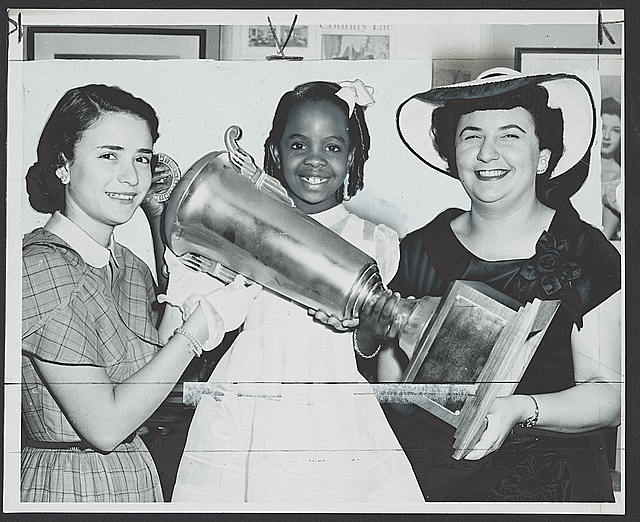
Seven-year-old Gladys Knight accepts her trophy for winning on Ted Mack’s Amateur Hour radio show (1952).

Support Life And Music
D.R.E.A.M.
Data, Research, Education, Awareness, and Music
IV.
This D.R.E.A.M. Report made possible through a generous grant by the Arizona Eastern Star Foundation. For more information about the Arizona Eastern Star Foundation, please visit https://www.azoes.org/az-oes-foundation.html
♫
“I feel I’m on top again, baby.” Love and Rockets
Methodology for this report:
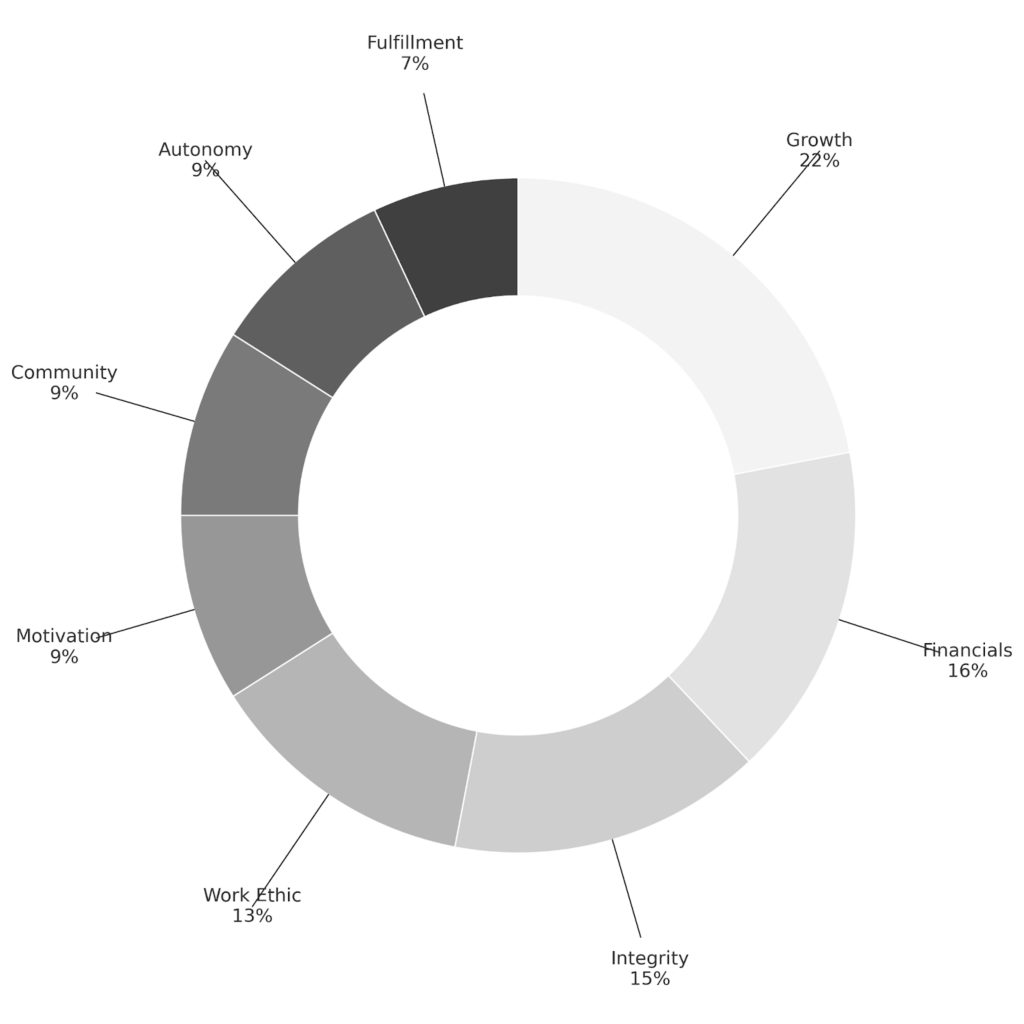
72 interview excerpts pulled from 36 SLAM: Music Survival Guide podcast episodes, totaling about 28.5 hours of conversation, were thematically coded into 8 categories capturing different definitions of the meaning of success in relation to the music industry. Interview excerpts were found by searching 125 keywords related to the word “success”. Each quote was coded to its primary category. We then calculated the number and percentage of quotes assigned to each category to identify which understandings of success were most frequently described.
♫
Categories
Longevity, Resilience & Growth:
“I’ve had my share of sand kicked in my face, but I’ve come through.” Queen
22% of interview excerpts revolved around the category of longevity, resilience & growth. Many artists noted that success was not instantaneous, and that not giving up through all of the ups and downs was the central component of their career achievement. Without the experience of failure, it is difficult to understand that you have succeeded.
“We’ve been in it for a minute, and we’ve had our successes, and we’ve had our struggles as well… because that’s also part of success…having a trial, having a setback, having the winds of change. That’s all a part of being a career artist, a career musician. Peaks and valleys… It’s not always an upward trend…we survive all the rest of it… [What] goes up, must come down, and then maybe we can somehow try to get that kite to soar again.“
A few artists discussed that while some people have natural talent, most people need to learn and grow to become successful.
“…It’s about doing the work, putting in the practice, putting in the work, and always striving to be better than you were before. It’s not about being better than anybody else, It’s being better than who you were last week, last month, last year.”
Financial Sustainability & Economic Stability:
“You’re a million dollar man that ain’t got no dough.” A Tribe Called Quest
16% of interview excerpts involved conversations around success being defined through making money. Financial sustainability was often correlated to discussions around music becoming a career, especially when there was not a ”9-5” to fall back on for stability.
“This is about making money. This isn’t about just doing this to hang out and have a good time and be with your buddies. It’s not ‘music friends,’ it’s ‘music business.’ There’s more letters in the word ‘business’ than the word ‘music,’ so you have to understand that if you are committed to doing this as a career, that means you’ve got to make money. You can’t record without money. You can’t tour without money. You can’t do anything without money.”
Large sums of money did not surface as the goal, money was more of a means to have the ability to make more music.
“The cool thing is, if you can find enough supporters, and… everyone just donates a little bit, it can be really successful … we’ve got the funding… we can move forward and get people what they want, which is more music, right?”
Artistic Integrity & Creative Control:
“And you’d be happy as hell to get a record deal / Maybe your soul you’d sell to have mass appeal.” Gang Starr
Almost as prevalent as making money, artistic integrity and creative control made up 15% of the excerpts. Making music that you are proud of, that is an outward expression of yourself and not because someone told you what to do or how to do it was essential to the feeling of success.
“I used a string quartet on an album of mine… I was so thrilled. But, you know, you had to pay for their time… I was at a gig with the funk band that I was in at the time, and there was a sub sax player that was playing with us, and I was playing [the album] in my car… and he was listening to it and he was like, ‘What is that?’ I said. ‘Oh, this is my new album…’ He’s like, ‘Is that a string quartet?’ I said, ‘Yeah,’ and he was like, ‘Must be nice to have a string quartet on your own album.’ I looked over at the car that he had driven to the gig, which was like that year’s model… I was in a 14 year old pickup truck, with literally a cardboard back window …I’m driving a cardboard car so that the money I do have I spend on a string quartet so that my album can sound really cool… You’re driving a brand new car that you spent your money on. So it’s just the choice that you’ve made is to have a brand new car. The choice I’ve made is to have a POS car and have a string quartet on my album, because to me, that’s way more important than what I’m driving. Who cares what I’m driving… as long as it carries the gear? It’s choices, and that’s the magic of this independent endeavor, is. It’s all choices.”
The idea of “selling out” or making music to become rich and famous led to demotivation, working in toxic situations, and becoming more emotionally tied to what others thought of your music. This is a dichotomy which artists find themselves in. One needs to make money to keep doing art, but if one makes money doing art then they risk becoming a “sell out.”
“That to me is what’s so important for an artist to understand…Your art is going to live forever and it’s going to be your name on that and you need to be proud of what you created, whether it sold a hundred copies or a million copies. You don’t want to, 20 years from now, go, ‘Oh, my God! I’m so embarrassed! I listened to that producer, and I recorded this album, and it’s an embarrassment to me. I wish I could remove every copy in existence…’ You want to be able to sit here and go, ‘I’m proud of it.’ I don’t care if nobody else gets it yet, because, as we were just talking about, they may get it in another 5 years, 10 years, 20 years. You created what you want to create. You weren’t chasing trends… Every artist that’s been through a major label probably has a story of, ‘Oh, yeah, the second album, the label said I need to record more songs like this to become bigger and more popular.’ And what inevitably happens with every one of those artists, they record something they’re embarrassed by. and it never became bigger than that previous album. But guess what. The manager’s name isn’t living on forever. The marketing person isn’t living on forever. The radio promoter isn’t living on forever. You are, because it’s your name plastered all over the front of that album cover. You better be happy to live with that as part of your legacy.”
Professionalism, Discipline & Work Ethic:
“Do what I do professionally / To tell the truth I am exactly what I want to be.” Beastie Boys
13% of the excerpts discussed that success was more than just playing the notes, it is the whole package: commitment, work ethic, working well with others and delivering on your goals.
“There’s this one thing that independent musicians can do, which is, teach yourself to be able to communicate to other artists in the most efficient way possible… I can come in and just rely on my skill as a bass player, because I’ve been playing for 30 years and read the chart, and we can efficiently get everything done in as little time as possible, because there’s no money for rehearsal space.”
“Take your time with your art and make sure that you’re happy with it. Stay out there playing, live, honing your skills, playing your catalog to new people, and when it’s time for that new music to come out…those people will be ready for it.”
As you hone and develop your skills, you are provided with new opportunities. New environments and experiences may come with unanticipated stressors.
“It really came down to crunch [time] again. It seems to be a thing… The record’s due in 2 months. We haven’t written a note yet… What are we waiting for!? …Here we are. Here’s a record… I mean we did it, and I am very happy with most of it. And that’s cool. But getting into the band that has this insane list of legacy players. I was so stressed out that I became my own worst enemy because I was totally tense and stressed all the time.”
Love of the Craft & Intrinsic Motivation:
“Gonna make it in a Rock and Roll show.” Diamond Head
Do you remember the last time you experienced childlike joy from doing something you love? This intrinsic draw to music, and love for the craft drove 9% of the conversation around success.
“That’s why I do this. I would not do this unless I loved writing songs. It is not for fame, it is not for money, it is not for anything other than just, I love writing songs.”
“Do you know what? You just hit the nail on the head there, love it! I never thought about money… I loved playing guitar… I put on AC/DC’s ‘Let There Be Rock’ and plugged in my guitar, and just started playing along. There was nothing to it. I wasn’t trying to impress myself or anyone else, or play for anyone. I was just playing for the fun of it…I think it’s the love and the passion that sometimes people forget. That’s the number one, most important aspect.”
As mentioned earlier, the journey is not easy, and there are unanticipated stressors. The ability to turn to the craft that one loves to manage the aspects of the process was also an important aspect of this category.
“Music is a medicine, and whenever you play you just forget everything else around.”
Connection, Community & Impact:
“The money that came and the public acclaim / Don’t forget what you are, you’re a Rock ‘n’ Roll star.” The Byrds
Putting yourself out there artistically and having your art received showed up as success in 9% of the interactions. The feeling of success was especially profound when the impact of the art created positivity and generated a community of fans.
“I think these songs are amazing… If they knew the impact that they have on people. I’m sure that I’m not the only one that could say this, their music has probably healed a lot of people in some ways.”
“A lot of people think you can buy your way into this stuff now, maybe some… But can’t buy the hardcore fan, the forever fan, or the people that … connect with what you’re doing. To me, that’s the best reward out of all of this. That’s the payoff there… I really feed off of that connective tissue of playing, and that’s why I’m always in the audience when I play. I always try to get out there, no matter what. No festival [has] ever stopped me from getting out to the crowd, no matter how difficult, you can ask anybody… that’s the best part of the show, being with the people and singing with them, and that’s cool… I’m so beyond grateful to have done what I’ve done, and you can’t buy that.”
The impact and the community that one’s music centered around was unfortunately not always positive, but remained impactful.
“It happened to me in my early years…. drugs and alcohol and success… at a time in our business when this stuff was kind of celebrated… as they said, ;If you remember the eighties, you weren’t there.’ There was a lot of that.”
Agency & Autonomy in One’s Career:
“I write the songs that make the whole world sing.” Barry Manilow
Many people can make music, but navigating your career strategically was the centerpoint of 9% of the excerpts.
There seem to be common pitfalls that are easy to fall victim to in the industry, for example: ending up in toxic situations or being taken advantage of. If you can avoid the pitfalls and make it out the other side, you can make music successfully.
“I think that is a big cause of depression… Other people in their lives that they’re dealing with, whether it’s a negative boss at your job… Life is short… Just go. You have to face fears every day in life, and that’s how we grow. If you’re in a situation like that, do everything you can to get out of it.”
“It’s been great to see that we’ve not only survived, but we’ve thrived… It’s my name on the door and star of the show. I think about ‘How would I like my band to be run based on how I’ve been in bands myself. How do I want to treat these guys, how would I like to be treated…?’ Pass the torch… walk the talk … I feel like I’ve fallen upward into a really great… musical endeavor.”
Personal Fulfillment, Relationships & Quality of Life:
“I can’t complain, but sometimes I still do.” Joe Walsh
Above and beyond the music and the job, having a quality life came up 7% of the time. Our discussions centered around making music in the music industry, but topics like family, taking time off, and being around people that bring you joy could not be left off the table.
“If more of the world could go to a campsite and play gin [the card game] for 4 hours next to a lake, I think a lot of the world’s problems could be solved very easily.”
“I think that that’s something that I look for everywhere in life: being around people who inspire you. And those people are usually the ones who have sort of achieved something.”
Taking the time to reflect and be grateful was also another important aspect of this category.
“I mean. I remember 2016 watching Iron Maiden and going, ‘Wow! That must be amazing. 90,000 people, look at the people. They’re going wild.’ A year later, I was doing it. I would have never guessed in a million years that I would be on that poster for 2017, and I did it. I did it. And if it was the only thing I ever did. I went to the Holy Land.”
Conclusion: The word “success” on the surface seems pretty simple, but from the number of words people use to describe success, to the complex and even dichotomous meanings shared about success, we can see that it is far from simple. There are unique aspects for musicians related to the categories we discussed, for example the business side of music is necessary at times and can bring unanticipated stressors, but is also a foundational outlet for joy. Yet the categories uncovered from these conversations are highly relatable to any career, a journey we all find ourselves in.
“I came, I conquered / Escaped the slaughter / I live undaunted
Let me take you with me / I think you’ll dig the scene” Warrior Soul

♫
More about D.R.E.A.M. Reports and Methodology
- The S.L.A.M. internal Data Research Education Awareness Music Team (D.R.E.A.M. Team) analyzed the full spoken content of 36 different “SLAM: Music Survival Guide” panel discussion recordings, tagging meaningful statements across various categories. This report focuses on quotes associated with the concepts of success.
- We did not seek to confirm or debunk the truth or validity of any statements made. The purpose was to analyze, process, quantify, draw logical connections, find meaningful commonalities, themes, and/or contradictions between the statements, and ultimately share the recorded observations, feelings, concerns, beliefs, philosophies, etc., in the speakers’ own words and lyrics. No judgments of the speakers or others present on the call are intended, nor should any be inferred.
- The speakers were invited to participate in “SLAM Summit: Music Survival Guide” panel discussions. All episodes are publicly available or are scheduled for release at http://www.supportlifeandmusic.org/voices. The quotes in this report will be kept anonymous, and are not intended to be taken out of context as any kind of reflection on any persons involved in the conversations.
- Some of the content presented has been edited to:
- Remove extraneous words and phrases, like “you know,” “um,” “like,” etc., as well as to remove repeated or stammered words/phrases.
- Correct obvious Zoom transcription errors in translation, dictation, or grammar. (crosschecked against the actual episode audio.)
- No statement was changed, no quote was edited to directly or indirectly change its original meaning in any way.
- The “Conclusions” sections of this report were written solely in-house at Support Life And Music, and its recommendations are drawn from S.L.A.M. backgrounds in the music industry and mental health, as well as from the designated data set. All facts, figures, opinions, conclusions, and suggestions in this article are presented solely for informational purposes. There are mental health improvement techniques that can be undertaken by anyone in any situation to benefit themselves and others, but consultation with a certified mental health professional is always recommended. See the Support Life And Music website for an expansive list of healthcare providers.
References
Love and Rockets. So Alive (1989). Love and Rockets [Album]. Beggars Banquet.
Queen. We Are the Champions (1977). News of the World [Album]. EMI – Elektra.
A Tribe Called Quest. Show Business (1991). The Low End Theory [Album]. Jive.
Gang Starr. Mass Appeal (1994) Hard to Earn [Album]. Chrysalis – EMI.
Beastie Boys. Pass the Mic (1992) Pass the Mic [Album]. Grand Royal – Capitol Records.
Diamond Head. It’s Electric. (1980). Lightning to the Nations [Album]. Happy Face Records.
The Byrds. So You Want to Be A Rock n’ Roll Star. (1967). Younger Than Yesterday [Album]. Columbia.
Barry Manilow. I Write the Songs (written by Bruce Johnston. Ironically.). (1975). Tryin’ to Get the Felling [Album]. Arista.
Joe Walsh. Life’s Been Good. (1978). FM: The Original Movie Soundtrack [Album]. MCA.
Warrior Soul. Downtown. (1990). Last Decade Dead Century [Album]. Geffen.
♫
Leave a Reply